Reported Houthi Attacks on Saudi Oil Assets Intensify Middle East Security Concerns
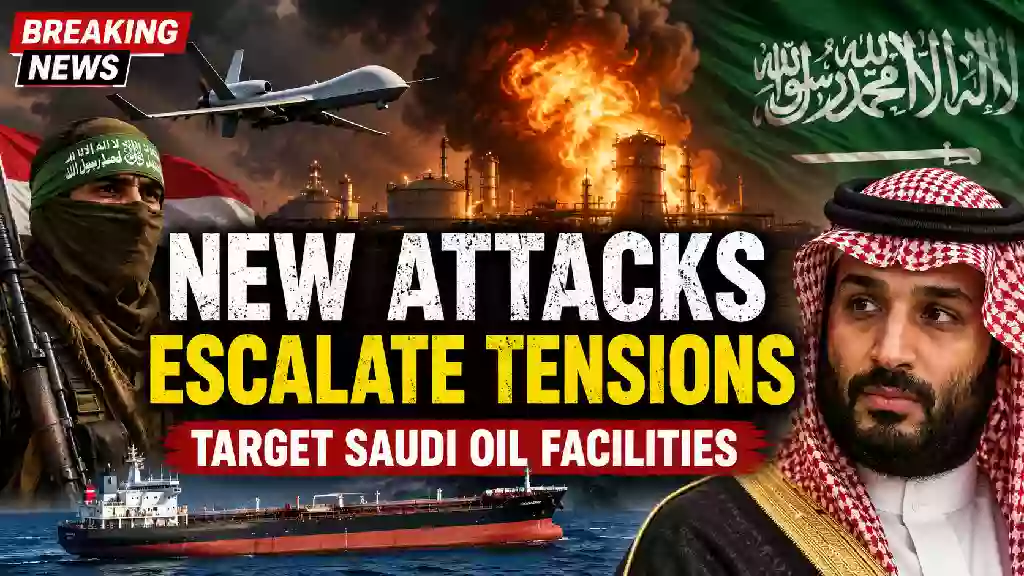
A dramatic news-style illustration depicting reported attacks targeting Saudi oil infrastructure, with imagery representing Houthi forces, military drones, an oil tanker, and Saudi Crown Prince Mohammed bin Salman as concerns grow over escalating Middle East tensions, regional security, and global oil markets.
Reported Houthi Attacks on Saudi Oil Assets Intensify Middle East Security Concerns
Regional Tensions Rise as Energy Infrastructure and Shipping Routes Face Renewed Threats
Fresh reported attacks by Yemen’s Houthi movement on Saudi oil-related assets have renewed concerns about security across the Middle East, raising fears that the conflict could spread further and disrupt global energy markets.
The reported strikes come as diplomatic efforts continue to ease regional tensions following a temporary pause in direct U.S. military operations. Analysts interviewed in the source discussion warned that renewed Houthi activity could increase pressure on key shipping lanes and prompt additional responses from Gulf nations and the United States.
Diplomatic Efforts Continue Despite New Violence
According to the discussion, President Donald Trump has temporarily paused U.S. strikes to allow diplomatic negotiations additional time, while Oman continues efforts to help reduce tensions surrounding the Strait of Hormuz.
The interview noted that the recent pause in military operations coincided with several days without reported attacks on merchant vessels travelling through the strategic waterway. While officials hope diplomacy can prevent further escalation, the latest reported Houthi operations have added fresh uncertainty to the region.
Houthis Reportedly Renew Maritime Operations
The discussion claims that Houthi forces, which had remained relatively inactive during much of the recent conflict, have resumed attacks against Saudi-linked maritime targets.
According to the interview, three Saudi vessels were reportedly targeted, although two were able to continue transporting oil after the incidents. The speakers also alleged that Iranian cargo aircraft had recently arrived in Houthi-controlled areas of Yemen carrying personnel and equipment, though these claims were discussed during the interview and were not independently verified within the source material.
Energy Markets Monitor Strait of Hormuz
The Strait of Hormuz remains one of the world’s most important oil transit routes, making any threat to maritime security a significant concern for international energy markets.
The discussion suggested that Saudi Arabia has alternative export routes capable of moving millions of barrels of crude oil daily if necessary. However, additional attacks on energy infrastructure or commercial shipping could still place upward pressure on global oil prices and create new supply-chain challenges.
Oil prices have remained highly sensitive to developments across the region, reflecting continued uncertainty surrounding the conflict and the security of international shipping lanes.
Gulf Allies May Increase Their Involvement
Military analysts participating in the discussion suggested that Gulf allies could assume a larger role if attacks continue against regional energy infrastructure.
The interview referenced Saudi Arabia, Kuwait, Bahrain and the United Arab Emirates as nations with shared security interests that may coordinate more closely in response to continued threats from Iranian-backed groups. Those comments reflected the analysts’ assessments rather than confirmed government announcements.
Military Experts Warn Against Complacency
During the discussion, retired military officials welcomed the temporary reduction in fighting but cautioned that pauses in military operations can allow armed groups time to regroup.
The interview also addressed questions surrounding U.S. missile interceptor inventories, with one participant disputing reports suggesting shortages and arguing that regional allies possess compatible defensive systems that could support future operations if required.
Uncertain Outlook for the Region
The latest reported attacks highlight how quickly security conditions in the Middle East can change despite ongoing diplomatic efforts.
Whether negotiations succeed or military operations resume on a larger scale will likely determine the direction of regional stability in the weeks ahead. For global markets, the security of Saudi energy infrastructure and the Strait of Hormuz remains a key indicator as governments continue monitoring developments.
Although diplomatic channels remain open, analysts agree that any further attacks on commercial shipping or oil facilities could significantly increase geopolitical tensions and renew volatility in global energy markets.
#MiddleEast #SaudiArabia #Houthi #Iran #Yemen #OilMarkets #EnergySecurity #StraitOfHormuz #Geopolitics #WorldNews #BreakingNews