US-Canada Trade Talks Collapse as 50% Tariffs Trigger Canadian Retaliation
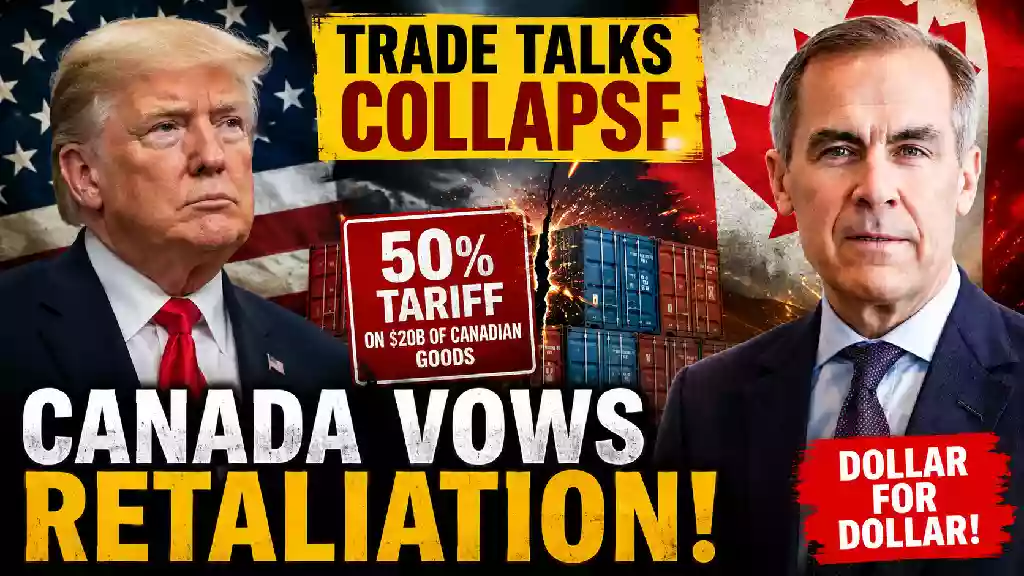
U.S.-Canada trade tensions escalate as 50% tariffs trigger a Canadian retaliation threat following the collapse of trade talks.
US-Canada Trade Talks Collapse as 50% Tariffs Trigger Canadian Retaliation
Canada Threatens Retaliation as US-Canada Trade Talks Collapse
Trade tensions between the United States and Canada are escalating after negotiations broke down, with Canada threatening to respond to new U.S. tariffs and Washington preparing countermeasures. The dispute has placed renewed pressure on the economic relationship between two of North America’s closest trading partners.
According to the supplied report, a 50% tariff on $20 billion worth of Canadian goods was scheduled to take effect at midnight. The measures affect politically and economically sensitive industries, including steel, aluminum, automobiles and lumber. U.S. officials say the tariffs followed the collapse of trade discussions with Canada.
Trade Negotiations Collapse
U.S. Trade Representative Ambassador Jameson Greer said there were currently no new talks scheduled with Canadian officials. He indicated that Washington was moving forward with measures designed to respond to Canadian retaliation.
The latest escalation comes after months of tension over tariffs and trade policy. Greer said the Trump administration’s broader objective is to encourage American production, protect U.S. workers and strengthen domestic supply chains.
The administration has argued that Canada was offered favorable treatment on several important products, including steel, automobiles and lumber, but that Canadian officials did not accept the proposed approach.
Canada Threatens Retaliation
Canada’s promise to respond dollar-for-dollar has raised the possibility of a deeper U.S.-Canada trade conflict. Retaliatory tariffs could increase pressure on businesses that depend on cross-border commerce and potentially affect the prices of products moving between the two countries.
The dispute is particularly significant because the United States and Canada maintain extensive economic ties. Industries such as automotive manufacturing, metals and lumber rely heavily on integrated North American supply chains.
If additional tariffs are imposed by both governments, companies could face higher costs and greater uncertainty as they determine how to manage cross-border production and trade.
Trump Administration Defends Tariff Policy
The Trump administration is presenting its trade strategy as part of an effort to prioritize American workers and domestic businesses.
Vice President J.D. Vance reinforced that message during remarks in Ohio, criticizing political leaders and corporations that he said had supported sending American jobs overseas. Vance argued that the administration is focused on American workers, businesses and communities.
The argument reflects one of the central themes of the administration’s tariff policy: using trade measures to encourage companies to manufacture more products inside the United States.
Beef Imports Become Another Trade Issue
The trade dispute comes as the administration is also addressing concerns over U.S. beef prices.
President Trump announced that the United States would allow up to 300,000 metric tons of ground beef imports during a 90-day period without an out-of-quota tariff. The supplied report says the beef is expected to be sold at 25% below current market prices.
The decision has generated concerns among some Republican lawmakers representing cattle-producing states. Montana Sen. Tim Sheehy, whose constituents include ranchers, questioned the potential impact on producers.
Administration officials defended the temporary imports, saying the 300,000 metric tons represents roughly 2.5% of annual U.S. beef consumption and is intended to address consumer demand.
Forced Labor Takes Center Stage
The interview also addressed the administration’s use of trade policy to combat products made with forced labor overseas.
U.S. officials argued that American workers should not have to compete with goods produced through forced labor or exploitative working conditions. The administration says tariffs and existing U.S. laws can be used to discourage imports connected to forced labor practices.
Officials described the issue as both an economic and moral concern, arguing that stronger labor standards could help protect American workers while putting pressure on foreign producers.
What the Trade Dispute Means for North America
The collapse of U.S.-Canada trade talks has created another period of uncertainty for businesses, workers and consumers across North America. Canada has indicated that it will retaliate, while the United States says it is prepared to respond to Canadian measures.
For now, the future of the U.S.-Canada trade relationship remains uncertain. Whether the two countries return to negotiations or move toward further tariff escalation could have significant consequences for industries that depend on the closely connected North American economy.
The immediate focus will be on whether both sides can find a path back to negotiations before additional trade measures deepen the dispute.
#Canada #UnitedStates #USTrade #CanadaTrade #Tariffs #TradeWar #TrumpTariffs #CanadaRetaliation #TradeTalks #AmericanWorkers